Our platform's architecture is built on six key components that work together to enable intelligent, collaborative AI assistance. These components — Agent-to-Agent communication, model context integration, memory (short- and long-term), knowledge graphs, continuous evaluations, and reinforcement learning — combine cutting-edge research from Google, Anthropic, and others to create a seamless system. Below we explain each technology in accessible terms and how they contribute to our system's capabilities.
Technology Deep Dive
How Our Platform Works
1. Agent-to-Agent (A2A) Communication Protocol
We implement Google's Agent-to-Agent (A2A) protocol to allow multiple AI "workers" (agents) to coordinate and delegate tasks among themselves. A2A provides a standardized communication layer so that agents can exchange messages containing context, instructions, or results with each other. In practice, this means one specialized agent can hand off a sub-task to another (for example, a scheduling agent calling on a research agent), with all necessary information passed along in a common format.
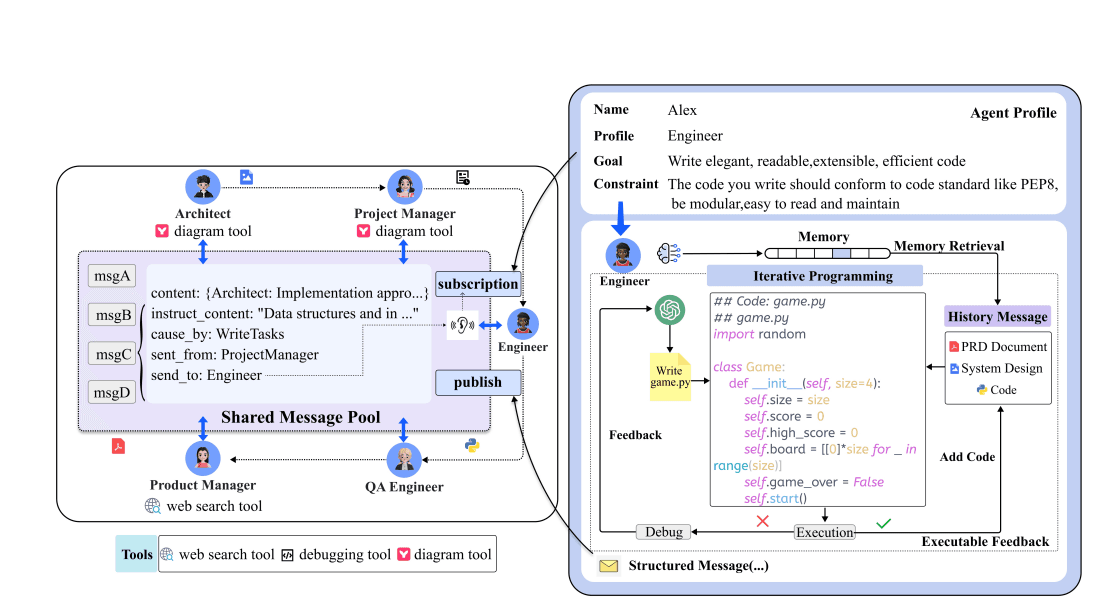
By adopting A2A, our platform enables a collective intelligence of agents working together rather than a single monolithic model. This inter-agent protocol is an essential enabler for complex, multi-step workflows by:
- •Promoting seamless collaboration across diverse AI systems.
- •Greatly enhancing scalability and flexibility.
- •Allowing agents to negotiate how to exchange complex data (like files or web content).
- •Ensuring the right agent handles the right task and all agents stay in sync.
2. Model Context Protocol (MCP) Integration
To connect our AI agents with the outside world of tools and data, we leverage Anthropic's Model Context Protocol (MCP). MCP is an open standard that acts like a "USB-C for AI integrations," providing a universal plug-in system for AI models to access external resources. In essence, MCP grants our agents external "eyes and hands": they can fetch information or invoke actions beyond their built-in capabilities.
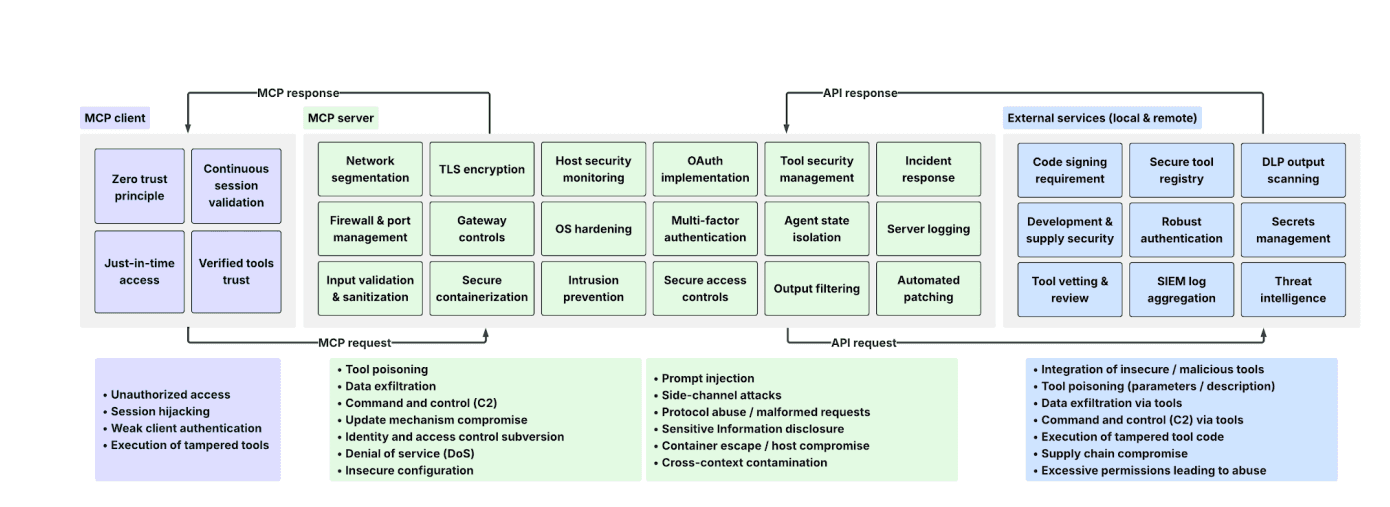
Source: Enterprise-Grade Security for the Model Context Protocol (MCP): Frameworks and Mitigation Strategies
Instead of being limited to what's in their training data, our agents can use MCP to securely interface with live databases, APIs, knowledge bases, or other services in real time. For example, an agent could retrieve a user's calendar from a calendar API or query a company knowledge base on the fly — all through standardized MCP connections rather than custom code for each tool.
Combined with A2A, which handles agent-to-agent messages, MCP allows those agents to include rich context and tool results in their communications. Together, these two protocols ensure our AI workforce can both collaborate internally and connect externally to deliver robust solutions.
3. Short-Term and Long-Term Memory (RAG)
Human-like intelligence requires memory, so our platform gives agents both short-term and long-term memory. Short-term memory is the immediate context an agent keeps during a conversation or task, while long-term memory is powered by Retrieval-Augmented Generation (RAG).
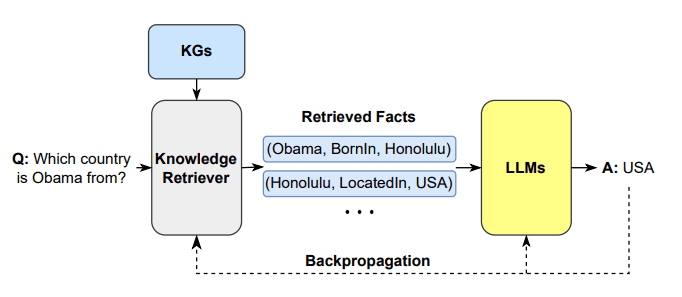
RAG allows an agent to fetch relevant information from an external knowledge store whenever needed. Here's how it works:
- •We convert documents, past conversations, or user-specific data into vector embeddings and index them in a vector database.
- •When an agent needs to recall something, it performs a similarity search in that database to retrieve the most relevant information.
- •Those retrieved facts are then added to the agent's context before it generates a response.
This approach gives the agent a powerful long-term memory, greatly reduces hallucinations, and allows the system to stay consistent over time.
4. Knowledge Graph for Structured Memory
In addition to unstructured documents and embeddings, we maintain a Knowledge Graph (using Neo4j) as part of the agent's long-term memory. This graph-based memory stores facts as nodes and relationships, which is especially useful for capturing user-specific knowledge and complex interconnections (e.g. "Project X is part of Initiative Y," "Alice manages Bob," etc.).
Organizing information as a graph allows the system to perform multi-hop reasoning in a very human-like way. For example, if the agent knows that Alice works at Company A and Company A is located in London, it can infer Alice's location by traversing those links.
The graph memory is also inherently explainable – one can trace which facts led the agent to a conclusion. This synergizes with the RAG approach: the graph excels at storing high-level relationships and facts, while the vector store covers detailed passages of text.
5. Continuous Agent Evaluation and Feedback
Ensuring that our AI agents behave reliably is crucial, so we built in a continuous evaluation framework that monitors each agent's performance in real time. Because AI behavior can vary, we evaluate not only the final output but also the process (trajectory) the agent took to get there.
Every time an agent works on a task, the system logs the sequence of steps, tool calls, and intermediate decisions. This trajectory is then analyzed to see if it matches a reasonable strategy. If an agent skips a critical step or uses a tool incorrectly, our evaluation system flags it.
By examining both the journey and the destination of the agent's reasoning, we catch issues that a simple pass/fail test might miss. This feedback is used to continuously improve the system, creating a powerful quality assurance loop.
6. Reinforcement Learning from Past Experience
Finally, our system learns from experience using reinforcement learning (RL) techniques. Each task an agent completes provides data on what strategies succeed or fail. We aggregate these trajectories and outcomes and use them to gradually train the agents to make better decisions.
When an agent achieves a desired result, we treat that as a reward signal; when it fails or deviates, that's a signal to adjust its policy. Over time, this feedback loop refines the decision-making policies of our agents, making them more efficient and effective.
The end result is continuous improvement: tasks that posed a challenge initially become easier for the AI to handle after it has accumulated enough experience. The platform doesn't just perform tasks — it gets better at them over time.
In summary, our platform brings together the best of modern AI research and engineering: a network of cooperating agents (A2A) enriched by external tools and data (MCP), backed by both short-term and long-term memory (RAG + knowledge graphs), and governed by rigorous oversight (evaluations) and adaptive learning (reinforcement). All these pieces work in unison to deliver an intelligent digital assistant that can handle complex tasks, learn from its experiences, and seamlessly integrate into the user's world. We believe this approach — inspired by innovations from organizations like Google and Anthropic — makes our solution truly state-of-the-art, while keeping the technical complexity under the hood so that end users and investors can simply enjoy what the system can do. Each component above is backed by active research, and we've provided references to key papers and articles for those who wish to dive deeper into the technology. By building on these foundations, our platform is not just a product, but also a continuation of the cutting edge in AI.
Further Reading & Inspirations
Our platform is inspired by and builds upon the following research papers, specifications, and articles. We encourage you to explore them to understand the foundations of modern AI collaboration.
Agent2Agent (A2A) Protocol Specification
https://google-a2a.github.io/A2A/specification/
Model Context Protocol (MCP) Introduction
https://modelcontextprotocol.io/introduction
METAGPT: META PROGRAMMING FOR A MULTI-AGENT COLLABORATIVE FRAMEWORK
https://arxiv.org/pdf/2308.00352
Unifying Large Language Models and Knowledge Graphs: A Roadmap
https://arxiv.org/pdf/2306.08302
Optimizing and Evaluating Enterprise Retrieval-Augmented Generation (RAG): A Content Design Perspective
https://arxiv.org/pdf/2410.12812
Enterprise-Grade Security for the Model Context Protocol (MCP): Frameworks and Mitigation Strategies
https://arxiv.org/pdf/2504.08623
Proposal for Improving Google A2A Protocol: Safeguarding Sensitive Data in Multi-Agent Systems
https://arxiv.org/abs/2505.12490